Supreme Court Dismisses Plea Seeking Gender-Neutral Divorce Rights Under Hindu Marriage Act
11 May 2026
The Supreme Court dismissed a Public Interest Litigation (PIL) filed by Jitendra Singh challenging Section 13(2)(iii) of the Hindu Marriage Act, a provision that grants a specific divorce remedy only to wives.
The petition sought to make the provision gender-neutral, arguing that the same right should be available to husbands.
What Does the Law Say?
Section 13(2)(iii) of the Hindu Marriage Act allows a wife to seek divorce if cohabitation has not resumed for one year or more after a decree awarding her maintenance against her husband.
The provision does not provide an equivalent right to husbands.
Jitendra Singh argued that the law should apply equally to both spouses and that gender-specific divorce rights are inconsistent with the principle of equality before the law.
Proceedings Before the Court
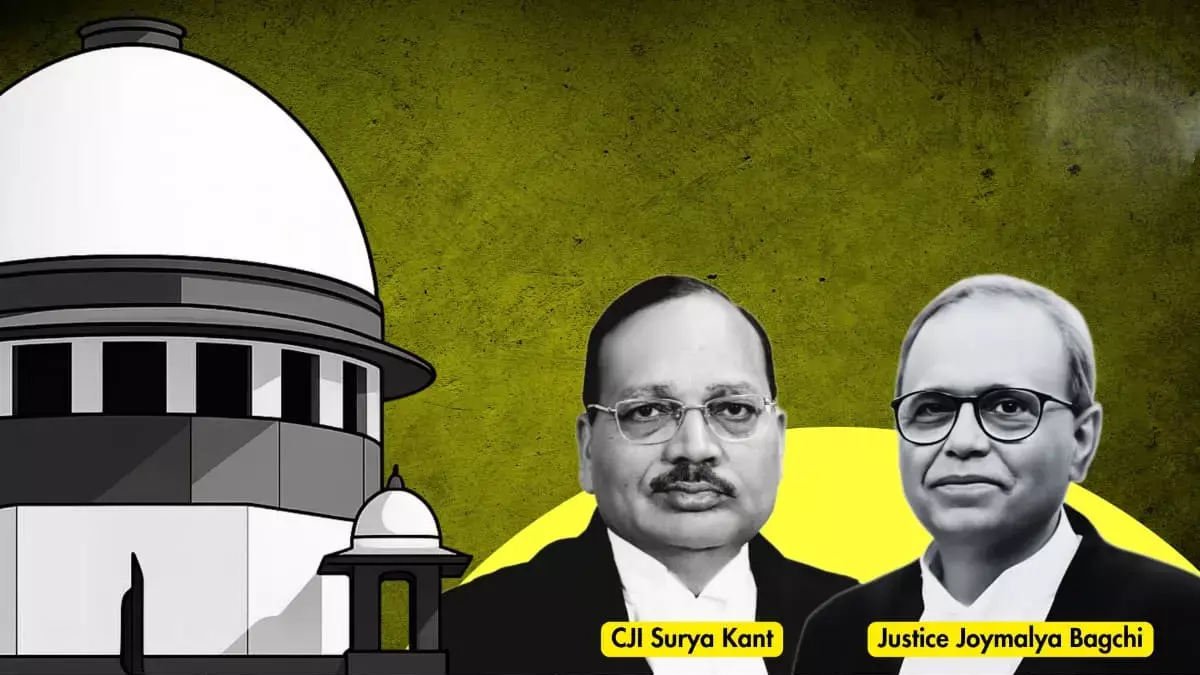
During the hearing, Chief Justice Surya Kant questioned Singh about his personal interest in the matter and asked whether he was involved in matrimonial litigation.
Singh informed the Court that he had been engaged in a matrimonial dispute for the past several years and had already transferred substantial assets to his wife.
The Court observed that while he may have genuine grievances, his ongoing dispute did not justify entertaining the PIL.
The petition was ultimately dismissed.
The Equality Question
The case highlights a broader debate surrounding gender-specific provisions in Indian family law.
Critics argue that if a legal remedy is available to one spouse, it should ordinarily be available to the other unless there is a compelling justification for unequal treatment.
They contend that laws governing marriage, divorce, maintenance, and custody should be based on equal rights and responsibilities rather than assumptions tied to gender.
Conclusion
The Supreme Court did not examine the merits of whether Section 13(2)(iii) should be made gender-neutral. As a result, the underlying question remains unresolved:
Should family laws continue to provide certain divorce rights exclusively to wives, or should such remedies be available equally to both spouses?
As India continues to debate gender equality in family law, the issue of gender-specific divorce provisions is likely to remain a subject of public discussion and legal reform efforts.